

✸ patterns + pantones + positioning
ISSUE #167
MAKING
At the tail end of 2019, Chris and I eased our way into a plant-based diet: first pescatarian, then vegetarian, and finally, fully vegan. The pandemic arrived soon after and the timing was oddly helpful: since we were already out of our regular routines and habits, it was easier to build new ones.
I also discovered that I really enjoy cooking with limitations. Having fewer options didn’t make me feel less creative – the constraints made me more creative. But it was not smooth sailing.
At that point, after years of cooking and hosting, I considered myself a pretty good cook. It came naturally to me. It was relaxing and easy. So it caught me off guard when I found myself struggling at the beginning of our vegan experiment. I assumed I would keep cooking the way I always had, just without animal products. Turns out, that is not how it works.
Vegan cooking uses many of the same tools and techniques, but you need to think differently. About flavor, texture, fat, protein, and satisfaction. All the things you instinctively know how to solve in one context suddenly don’t work and need to be relearned in another.
Fast forward to now. We’re no longer vegan, but I am a better cook for having gone through it. And when I was in Michigan working on my pattern collection, I had déjà vu…
I’ve been a designer for 25+ years. I understand color, balance, contrast, composition, and layout. I’m fluent in Adobe Illustrator. So, just like cooking, I assumed designing patterns would be easy. Ha!
I do have a head start. The skills are there. The tools are familiar. But pattern design has its own logic. It requires a different relationship to color and composition. There are variables at play that aren’t factors in a logo, layout, or single finished piece — most obviously the repeat, but also scale, rhythm, rotation, direction, and how each pattern relates to the others in a collection.
It was humbling. But I also loved that. I loved being challenged by something adjacent to what I already know. I loved the reminder that mastery in one form doesn’t automatically make you fluent in another.
So yes, I’m hoping to come out of this with a pattern collection – or two, or a few. But more than that, I hope I come out of it a better designer and more willing to be new at something I thought I already knew.
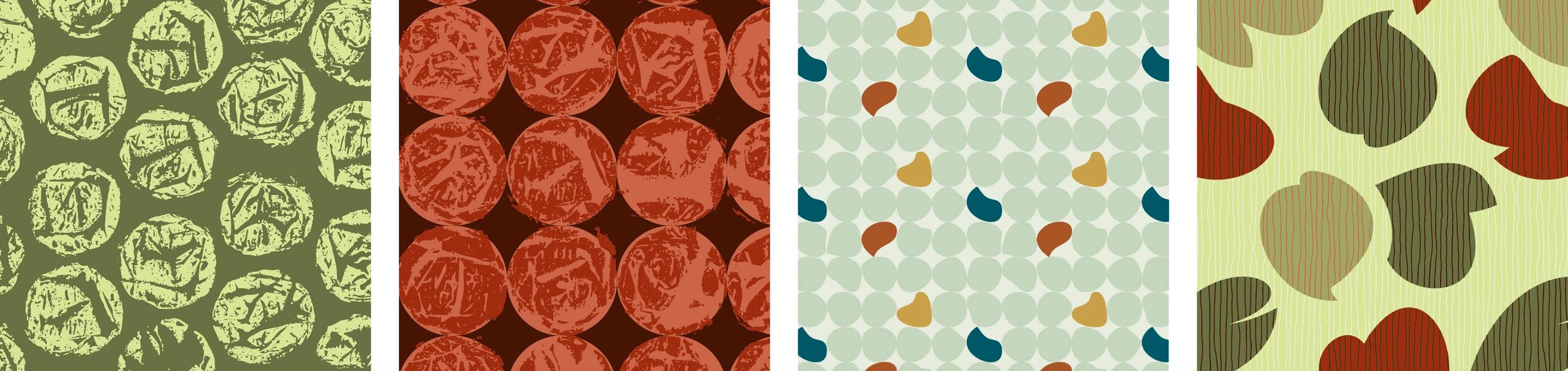
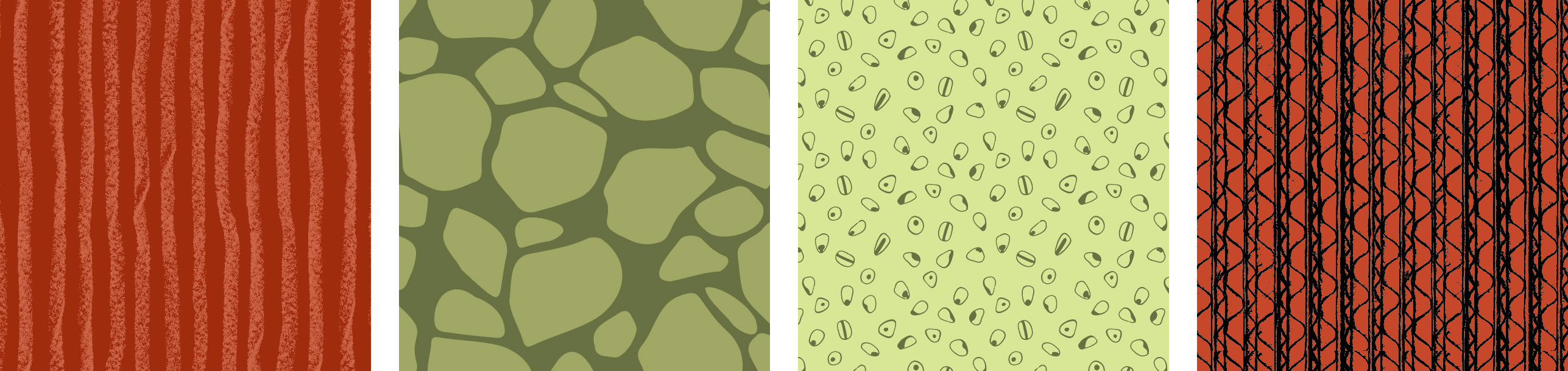
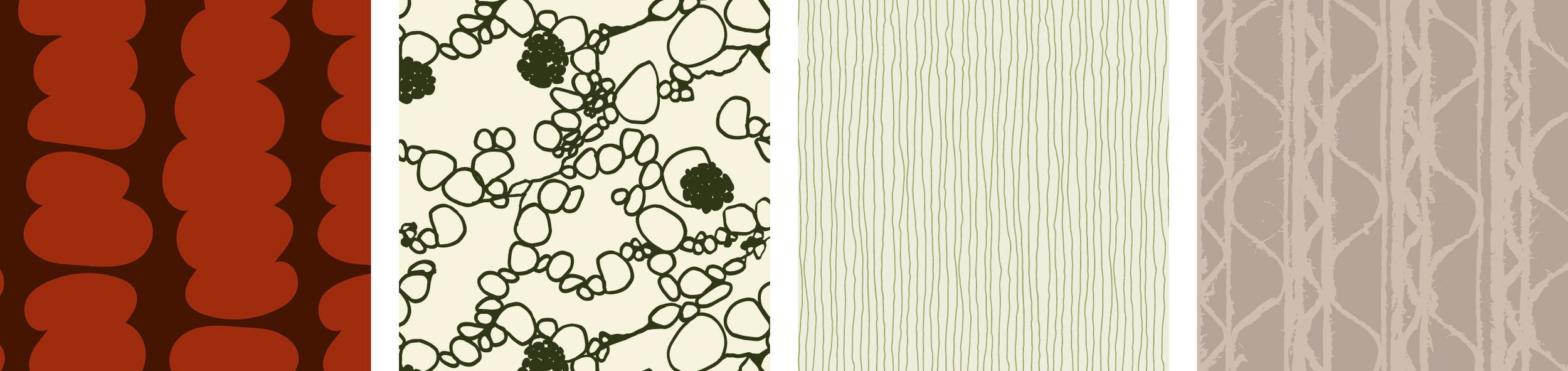
pictured above (three images): First Pancake* Patterns
* The first ones that come out okay, but not great. It’s okay that they’re just okay because they’re pancakes and even a not-perfect pancake is a good pancake (and better than no pancake at all). And you have faith that the second, third, and the rest of the batch will be better than the first – because that is the law of pancakes.
I’m trying to go easy on myself and remember that I’m just beginning the learning process of surface pattern design. It will get easier and I will get better. 🤞
LOVING
I 💖 this so much.
Food, color, nerdy designer tools — a perfect trifecta.
Palate Palette: Pantone edition by The Taste Curators
THINKING
At the stroke of midnight on January 1, 2002, we launched kitemath.com. It was a Flash site, naturally — because it was 2002, and Steve Jobs hadn’t killed Flash yet. Since then, Kitemath has gone through six or seven updates and redesigns. The logo has changed three times. The current version (above) is, by far, the best and longest lasting.
You know me here as Makeist. Many of you also know Kitemath, or KM for short. And somewhere along the way, I started shortening Makeist to MK, which is basically KM in the mirror. That was not intentional. But I do love when things accidentally make sense.
For the past year or so, most of my creative attention has been on Makeist, while Kitemath has been quietly simmering on the back burner. Lately, I’ve been wrestling with how the two relate to each other. Or whether they relate to each other at all.
Does Kitemath transition into Makeist?
Does MK replace KM?
Are they separate? Connected? Secretly the same thing wearing different outfits?The part I kept getting stuck on was selling.
I don’t want Makeist to be about selling. From the beginning, my internal tagline has been sharing, not selling. Makeist is where I follow curiosity, gather ideas, make things, think out loud, and invite people in.
But Kitemath has always been the business. Clients, projects, proposals, billing, marketing, positioning, selling. Not the icky kind of selling, but the necessary kind — the kind that keeps a studio alive and the cats fed.
And then it hit me:
Makeist is Me. Kitemath is We.
Kitemath is the shared studio: the partnership with Chris, the collaboration with clients, the work we make with and for other people.
Makeist is mine. It is personal. It is where I get to be curious — without having to convert that curiosity into a service offering.
That one small distinction solved a lot of problems. It gave Makeist room to stay what it is and gave Kitemath permission to become what it needs to be next.
So now Chris and I are redefining Kitemath. Again. And much like our current logo, this direction is by far my favorite version yet. Stay tuned…
***
pictured above: current and favorite Kitemath logo